


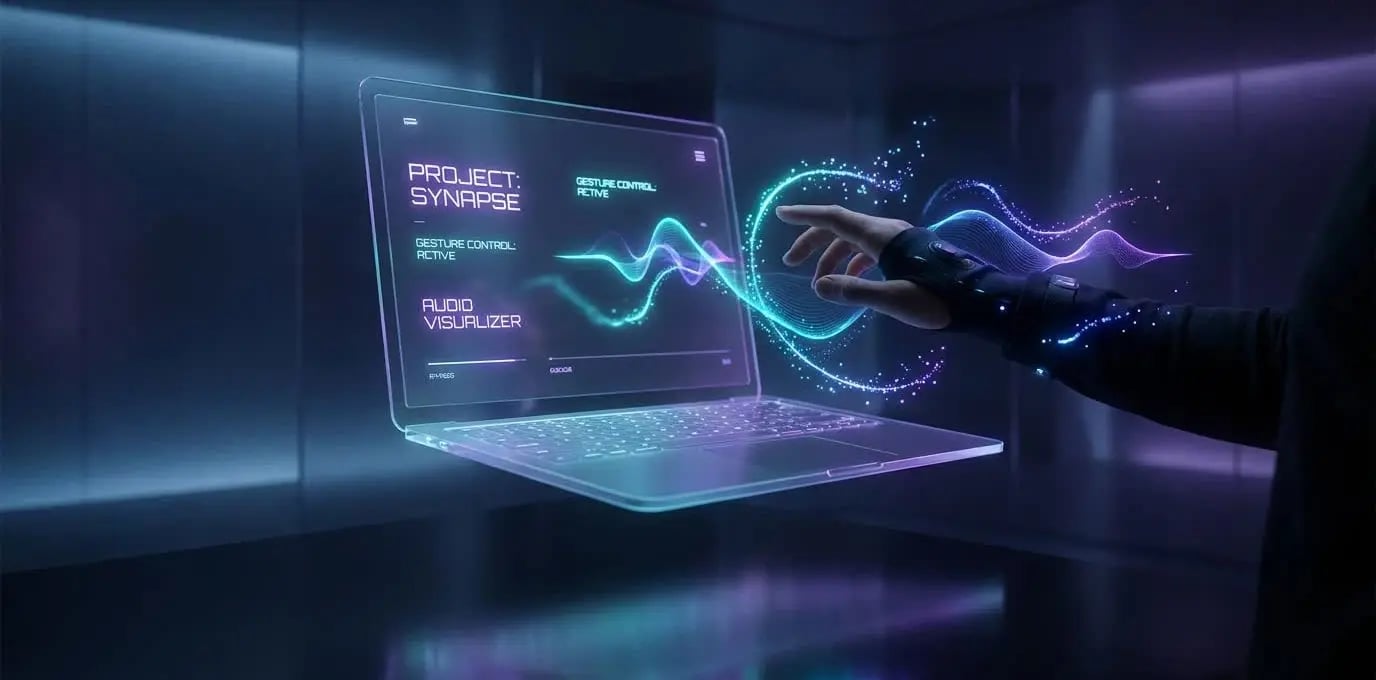
The era of the mouse click as the primary bridge between humans and digital interfaces is officially drawing to a close. In 2026, user engagement has evolved past rigid, flat screens into a fluid, multimodal ecosystem. Modern consumers expect to seamlessly weave voice commands, natural hand gestures, spatial movements, and contextual touch into a single, cohesive browsing session. If a platform is still designed with only the traditional cursor in mind, it is already obsolete.
The Shift to Fluid Human-Computer Interfaces
For decades, web design was restricted by physical boundaries: a desk, a keyboard, and a mouse. Today, the ubiquity of mixed-reality hardware and advanced ambient computing has altered user behavior.
A user might start discovering a brand via a voice request while cooking, expand the visual layout with a simple hand gesture onto a nearby smart surface, and complete a high-security transaction with a biometric glance. The interface must adapt in real-time, predicting transitions across different input methods without breaking the user's focus or pacing.
Engineering for Low Latency and Sensory Feedback
Multimodal design introduces a unique challenge: the cognitive load of changing communication modes. When an interface fails to respond instantly to a spoken word or a subtle gesture, the illusion of digital fluidness shatters.
Web architecture in 2026 demands hyper-optimized asset delivery and zero-lag response loops. Furthermore, incorporating non-intrusive haptic feedback and dynamic visual cues ensures that the user receives subtle confirmation for every interaction, turning a cold digital layout into an intuitive extension of physical reality.
Structuring Content for Cross-Platform Processing
To thrive in a multimodal web, content cannot remain trapped inside static text boxes. Content management systems must serve highly modular, semantic data.
Voice engines, screen readers, and augmented-reality overlay systems need to parse, read, and reconstruct your site's core message on the fly. Implementing clean schema markup and deeply structured HTML layout patterns ensures that whether your site is seen on a phone screen, heard through smart earbuds, or projected into a spatial environment, the message remains perfectly intact.
Capturing the Milliseconds of Attention
With endless automated content competing for human focus, selective attention span is shorter than ever. Interfaces must eliminate friction before it even forms.
By designing layouts that allow users to jump straight to their intent—whether by shouting a command or pointing a finger—you bypass traditional multi-step navigation menus. Visual aesthetic and high-performance engineering must work hand-in-hand. The future belongs to platforms that can capture a human intent in milliseconds, process it across multiple senses, and fulfill it gracefully.